

preface
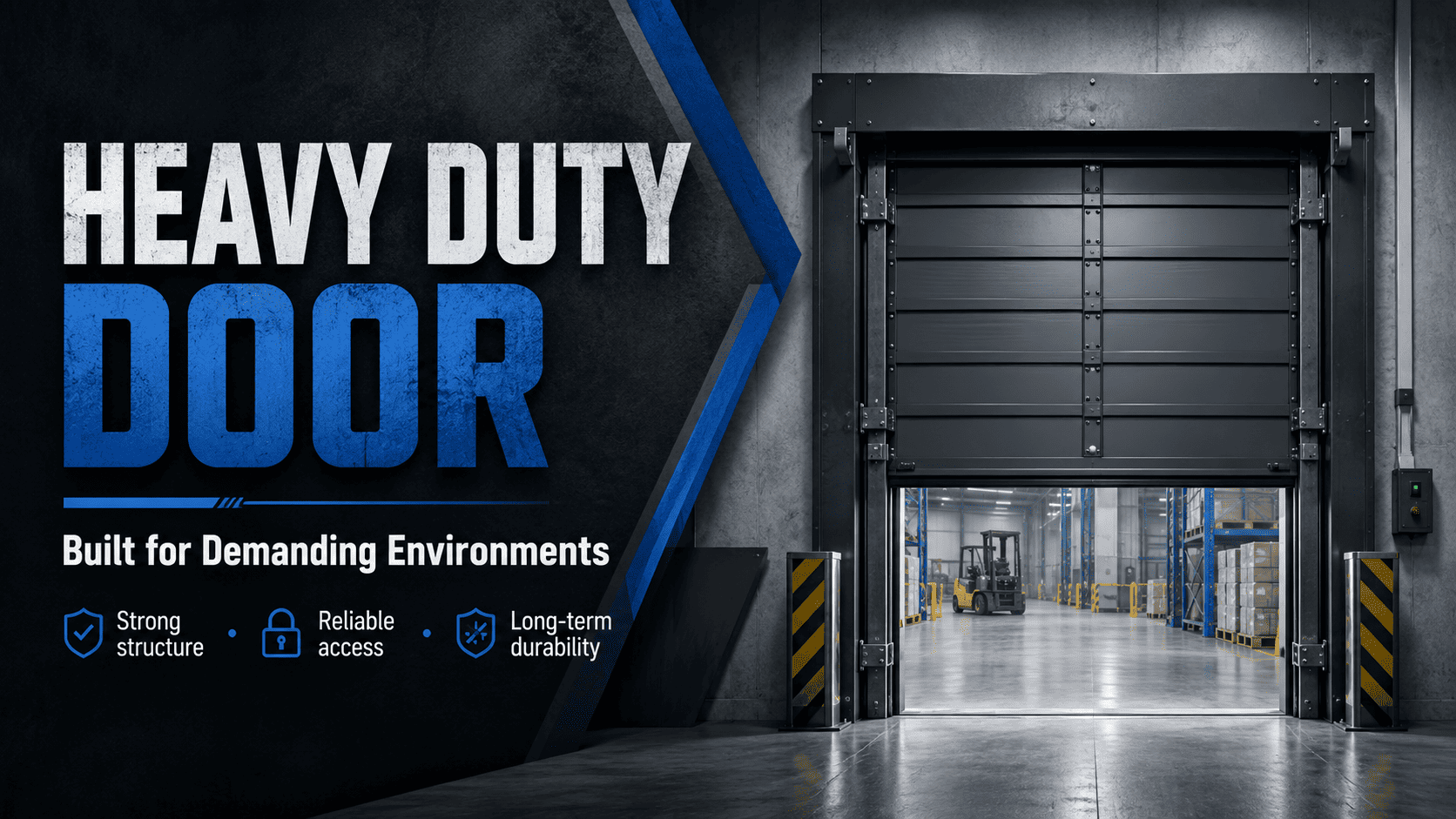
Heavy Duty Door refers to a high-strength door system designed for industrial, commercial, logistics, security, and high-traffic environments. Compared with standard residential doors, heavy duty doors are built to handle stronger impact, frequent operation, security requirements, fire-rated needs, weather exposure, and long-term durability.
Selecting the right Heavy Duty Door is not only about choosing the thickest door panel. The door material, reinforced frame, hinges, lock, opening size, fire rating, insulation, access control, and maintenance conditions must all work together. A strong panel installed on a weak frame will still fail.
For warehouses, factories, logistics centers, cleanrooms, mechanical rooms, and commercial back-of-house spaces, the wrong door may affect workflow, security, energy efficiency, and maintenance cost. The correct door should be selected according to actual traffic, impact level, environment, and safety requirements.
Contents
Section One: What Is a Heavy Duty Door?
A Heavy Duty Door is normally manufactured with reinforced materials, stronger structural design, durable hardware, and better resistance to impact, wear, and frequent operation. The complete system may include a reinforced frame, heavy-duty hinges, security locks, insulation, and certified fire-rated components.
A standard door is mainly designed for basic access, privacy, and appearance. A heavy duty door focuses on durability, safety, security, and performance under demanding operating conditions.
Industrial sites often involve forklifts, carts, machinery, heavy traffic, dust, humidity, temperature changes, and higher security needs. A weak door may bend, rust, fail to close properly, or become a safety risk after repeated impact.
Common facilities include warehouses, factories, logistics centers, mechanical rooms, commercial kitchens, cleanrooms, laboratories, hospitals, parking areas, security rooms, and commercial service areas.
Section Two: Common Types of Heavy Duty Doors
| Door Type | Common Application | Main Feature |
|---|---|---|
| Heavy Duty Steel Door | Factories, warehouses, utility rooms | Strength, security, and impact resistance |
| Fire-Rated Door | Stairwells, plant rooms, fire separation areas | Controls fire and smoke spread for a rated period |
| Sliding or Rolling Door | Loading bays, logistics and wide openings | Space-saving and suitable for large openings |
| Hinged Commercial Door | Corridors, kitchens and equipment rooms | Simple, reliable, and easy to integrate with access control |
The door type should be selected according to opening size, traffic frequency, available space, security, fire rating, and maintenance needs. A large rolling door may be ideal for loading operations, while a reinforced hinged door is more suitable for controlled access rooms.
Section Three: Common Applications
Warehouses and logistics centers require doors capable of handling frequent movement, equipment traffic, security, and loading operations. Rolling, sliding, and steel doors are commonly used to protect goods and maintain workflow.
Factories may require different doors for production zones, machine rooms, fire separation, storage areas, clean zones, and temperature-controlled spaces. The door must match exposure to heat, dust, oil, chemicals, or impact.
Commercial buildings use heavy duty doors in service corridors, kitchens, storage rooms, parking areas, and staff-only spaces. These locations often require both security and fire-rated performance.
Cleanrooms and controlled environments require smooth surfaces, proper sealing, hygiene, and pressure control compatibility. In these areas, the door is part of the controlled system, not simply an access panel.
Section Four: How to Choose a Heavy Duty Door
Material selection depends on strength, corrosion resistance, fire rating, insulation, and appearance. Steel is widely used, while stainless steel, aluminum, or composite materials may be more suitable for humid, hygienic, or corrosive environments.
Impact resistance is important in warehouses and factories where carts or forklifts may contact the door. Reinforced panels, frames, hinges, and edge protection should be considered according to the expected impact level.
Security requirements may include reinforced locks, electronic access control, card readers, keypads, panic bars, and automatic locking systems. High-security areas require the door leaf, frame, wall, and hardware to perform as one system.
Outdoor or temperature-controlled applications may require weather seals, corrosion-resistant coatings, thermal insulation, and drainage details. Insulated doors help reduce air loss in cold storage or air-conditioned facilities.
Section Five: Installation Considerations
Before installation, the opening size, wall strength, frame condition, floor level, and surrounding structure must be inspected. Installing a heavy door into a weak wall or poorly anchored frame will reduce performance and may create safety problems.
Hinges, tracks, rollers, closers, handles, locks, and panic devices must support the door weight and operating frequency. Poor hardware selection is one of the most common causes of sagging, closing failure, and repeated repair.
For fire separation or emergency exits, the door, frame, seals, hinges, and hardware must be compatible with the required rating. Replacing one component with a non-compatible product may affect overall compliance.
Maintenance access should be considered during design. Motors, hinges, tracks, closers, and locking systems must remain accessible for inspection and repair, or future maintenance will become unnecessarily difficult.
Section Six: Cost Factors
Door size and material directly affect price. Stainless steel, insulated construction, fire-rated assemblies, and custom finishes usually cost more than standard steel configurations.
Custom dimensions, windows, louvers, access control, special coatings, seals, and automation increase design and fabrication costs. However, these features may be necessary for actual operation and safety.
Installation cost increases when structural reinforcement, high-level work, electrical wiring, wall modification, or certified fire-rated installation is required.
A lower purchase price may result in higher long-term cost if hinges, rollers, locks, or motors fail frequently. Total cost should include maintenance, downtime, replacement parts, and operational disruption.
Section Seven: Industry Trends
Automated heavy duty doors are increasingly used in logistics, warehouses, parking areas, and factories. Automation improves workflow and reduces repeated manual operation.
Smart access systems may include card control, biometrics, remote monitoring, and integration with building management systems. These functions improve security and access records.
Insulated panels, better seals, and fast-opening systems help reduce air loss and improve energy efficiency in industrial and commercial facilities.
Future heavy duty doors will focus on stronger lightweight materials, automation, safety sensors, energy efficiency, remote monitoring, and predictive maintenance.
Conclusion
Heavy Duty Doors are essential for industrial, commercial, logistics, and high-security facilities. The correct selection must consider material strength, structural conditions, hardware, safety requirements, and maintenance.
A good door system should match the operation of the facility, not only the opening dimensions. Door leaf, frame, hardware, access control, and installation must be treated as one complete system.
FAQ
What is a Heavy Duty Door?
It is a high-strength door system designed for industrial, commercial, security, or high-traffic environments.
Where are Heavy Duty Doors used?
They are commonly used in warehouses, factories, logistics centers, commercial buildings, cleanrooms, and security areas.
What materials are suitable?
Common options include steel, stainless steel, aluminum, and reinforced composite materials.
Are Heavy Duty Doors fire-rated?
Some models are fire-rated, but the rating depends on the complete door, frame, seals, hardware, and installation.
How much does a Heavy Duty Door cost?
Cost depends on size, material, fire rating, hardware, automation, customization, and installation complexity.
How do I choose a supplier?
Choose a supplier with industrial project experience, customization ability, installation support, and reliable after-sales service.