

Preface
Collagen Supplement ODM is a product development and manufacturing service that helps supplement brands create customized collagen products, from formula design and ingredient selection to flavor development, packaging, production, and export preparation. For brands entering the beauty-from-within market, ODM cooperation can reduce development time and provide technical support throughout the product launch process.
Unlike simple private label purchasing, collagen supplement ODM usually involves product positioning, formula customization, packaging planning, quality control, and market-oriented product development. Choosing the right ODM manufacturer is essential because collagen products require stable raw material quality, good solubility, suitable taste, and compliant labeling.
Many brands first look at MOQ or production price, but for collagen products, long-term success usually depends more on formula logic, taste acceptance, packaging convenience, regulatory preparation, and supply stability. In other words, collagen supplement ODM is not simply about finding a factory that can fill powder into packages. It is about building a product that is technically workable, commercially clear, and repeat-purchase friendly.
Contents
Section One: What Is Collagen Supplement ODM?
ODM means Original Design Manufacturing. In supplement manufacturing, ODM suppliers help brands develop products based on market positioning, target consumers, formula direction, packaging format, and production requirements. The manufacturer is not only producing the product but also supporting product design. This makes ODM especially useful for brands that want more than standard stock formulas.
ODM is different from OEM. OEM usually means the brand already has a formula or product concept and asks the factory to manufacture it. ODM provides more development support, such as formula suggestions, sample testing, flavor adjustment, packaging consultation, and production planning. For new entrants, this additional development layer often reduces trial-and-error costs.
Brands choose collagen supplement ODM because it helps shorten product development time and reduce technical barriers. For new brands, ODM support can be especially useful when they do not have an in-house R&D team or production facility. It allows them to focus more on branding, channel building, and customer communication.
Businesses suitable for ODM cooperation include beauty brands, wellness brands, e-commerce sellers, nutrition supplement distributors, private label companies, pharmacies, clinics, spa brands, and lifestyle brands planning to launch collagen powders, capsules, tablets, or drinks. The more clearly a brand understands its target market, the more useful ODM cooperation becomes.
Section Two: Common Collagen Supplement Product Types
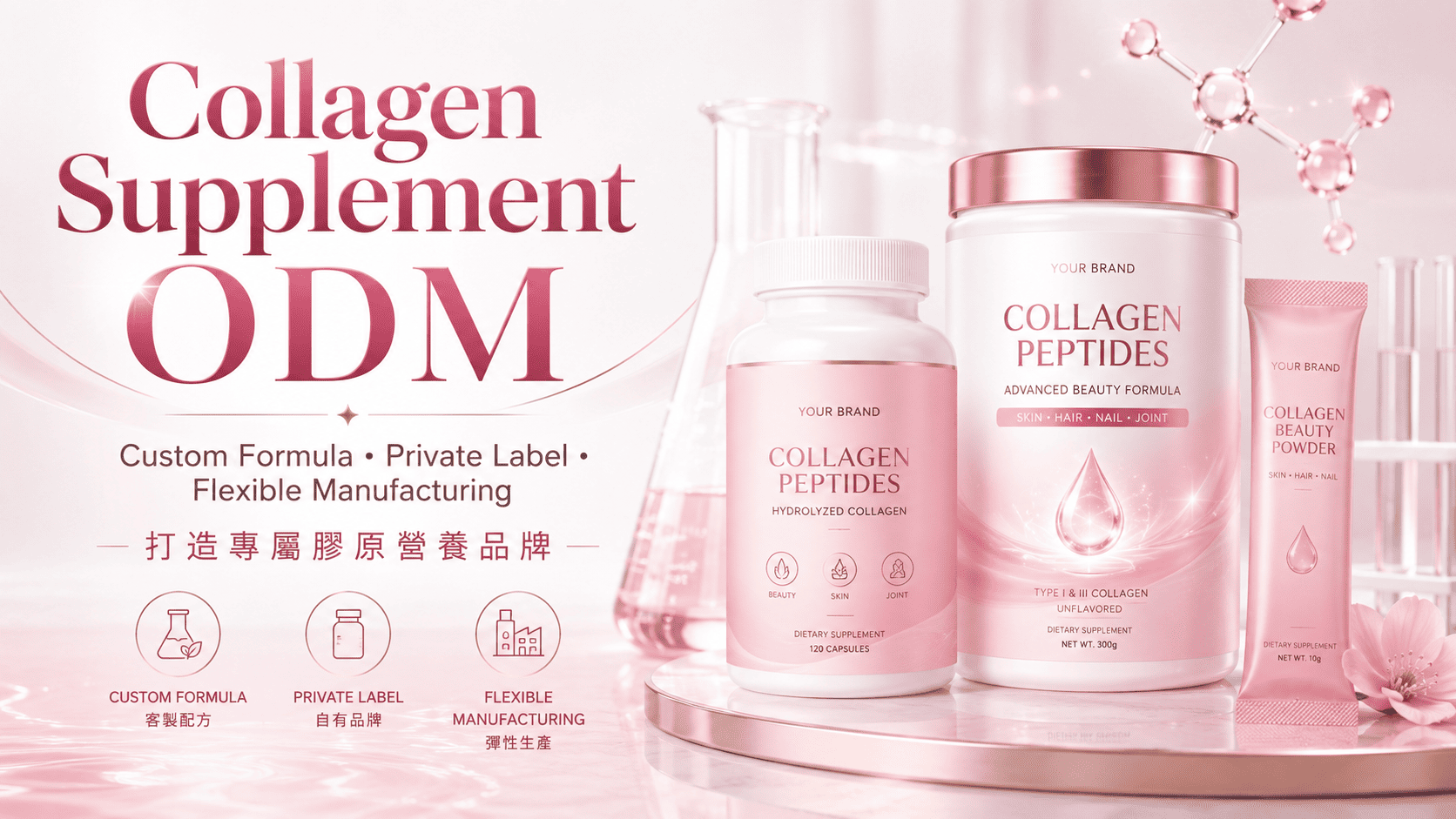
Collagen powder supplements are one of the most popular formats because they are easy to formulate, easy to package, and suitable for daily consumption habits. Powder products can be packed in jars, sachets, stick packs, or bulk packaging. For many brands, powder remains the most flexible format when balancing product identity, dosage, and packaging cost.
Collagen tablets and capsules are suitable for consumers who prefer convenient, tasteless, and portable products. They may be easier to carry than powder, but dosage limitations should be considered because each tablet or capsule has limited capacity. This means brands need to think carefully about user expectations, especially if they want higher daily collagen intake.
Collagen drinks and stick packs are popular for beauty and lifestyle positioning. Ready-to-drink formats provide convenience, while stick packs are lightweight and suitable for travel, office use, and e-commerce shipping. These formats often work well for brands that want a more premium or giftable consumer experience.
Functional collagen formulas with added nutrients are also common. Brands may combine collagen peptides with vitamin C, hyaluronic acid, elastin, ceramide, probiotics, berry extracts, or other beauty-support ingredients, depending on target positioning and local regulations. The challenge is not only adding ingredients, but ensuring the combination still makes sense in taste, cost, and label communication.
Section Three: Collagen Supplement ODM Development Process
Product positioning and market planning should come first. The brand should define whether the product targets beauty, aging support, sports recovery, daily wellness, premium gifting, women’s health, or convenient nutrition. Without this step, formula development often becomes too generic and difficult to differentiate in the market.
Formula development and ingredient selection come next. The ODM manufacturer may suggest collagen source, dosage range, supporting ingredients, sweeteners, flavoring, solubility enhancers, and product format. At this stage, cost and market differentiation must be considered together, not separately.
Sample testing and flavor adjustment are important for collagen powder products. Collagen may have a natural taste or smell, so flavor balance, sweetness, texture, dissolving speed, and aftertaste need to be tested before mass production. A technically good formula may still fail commercially if the sensory experience is unpleasant.
Packaging design and production preparation include label layout, box structure, sachet size, jar selection, carton design, regulatory content, barcode, batch number, and shelf-life information. A good ODM process should help brands avoid packaging errors before production, because packaging mistakes often create expensive delays later.
Section Four: Key Ingredients and Formula Considerations
Collagen peptide source selection is a key decision. Common sources include fish collagen, bovine collagen, and other animal-derived collagen peptides. Brands should consider consumer preferences, allergen concerns, market positioning, and sourcing transparency. Source selection is not only a technical issue; it also affects branding and customer trust.
Molecular weight and solubility also matter. Collagen peptides with better solubility are often preferred for powder and drink products because consumers expect easy mixing and smooth mouthfeel. Even when a source looks good on paper, poor dissolution can quickly reduce user satisfaction.
Vitamin C is commonly combined with collagen formulas because it is often associated with collagen-related nutritional positioning. However, product claims must remain compliant with the target market’s regulations and should avoid exaggerated beauty or medical claims. A practical formula should always balance market appeal with compliance discipline.
Flavor, sweetness, and texture optimization are essential for repeat purchase. Even a formula with high-quality ingredients may fail if the taste is unpleasant or the powder clumps easily. In collagen ODM, technical quality and consumer experience are closely linked, and brands should never treat flavor as an afterthought.
Section Five: Cost Factors in Collagen Supplement ODM
Collagen Supplement ODM minimum order quantity requirements affect startup cost. Lower MOQ may be suitable for new brands, but unit cost is often higher. Higher MOQ can reduce unit cost but requires more inventory planning. This means MOQ should be chosen based on the brand’s actual launch strategy, not only on factory preference.
Ingredient quality and formula complexity also affect pricing. Premium collagen sources, branded ingredients, additional nutrients, flavor systems, and clean-label sweeteners can increase cost. A more complex formula may sound attractive, but if the positioning is unclear, the added cost may not translate into stronger market value.
Packaging materials and private label design can significantly affect budget. Stick packs, printed boxes, jars, aluminum pouches, and premium packaging all have different costs and MOQ requirements. Many new brands underestimate how much packaging decisions influence total project cost.
Testing, certification, and export documentation should also be included in the launch budget. Depending on the target market, brands may need COA, microbiological testing, heavy metal testing, allergen information, free sale certificates, or export documents. A realistic budget should always extend beyond production itself.
Section Six: How to Choose a Collagen Supplement ODM Manufacturer
R&D capability and formula experience are important. A good manufacturer should understand collagen raw materials, flavor masking, powder blending, dosage design, and market trends. This matters because collagen products are easy to copy in appearance, but not easy to differentiate well without strong formulation experience.
Production certification and quality control should be checked before cooperation. Brands should review factory certification, production environment, batch control, testing process, and quality management system. These points matter more over the long term than a single attractive quotation.
International export support is valuable for brands targeting overseas markets. The manufacturer should understand documentation, packaging requirements, shipping coordination, and market-specific compliance needs. For export-driven brands, this support can reduce launch delays and compliance mistakes.
Long-term supply stability is also critical. Collagen products depend on raw material consistency, packaging availability, production scheduling, and quality control. A reliable ODM partner should support repeat orders and future product expansion, rather than only focusing on the first batch.
Section Seven: Market Trends in Collagen Supplements
Beauty-from-within supplement demand continues to grow as consumers look for daily nutritional products that fit beauty and wellness routines. Collagen remains a common category in this market. However, the market is also more crowded than before, which makes differentiation increasingly important.
Powder stick packs and convenient formats are increasingly popular because they are easy to carry, easy to dose, and suitable for online sales. Convenience is becoming a key factor in product design, especially for busy consumers who want products that fit into daily routines without extra effort.
Clean label and functional ingredient trends are shaping product development. Consumers may prefer formulas with fewer artificial additives, transparent ingredients, and practical daily-use positioning. This means brands need to think not only about what they add, but also about what they choose not to add.
Future opportunities in collagen ODM products may include sugar-free powders, multi-functional beauty blends, collagen plus probiotics, collagen drinks, premium marine collagen, and personalized supplement formats. Brands that combine practical positioning with better user experience will likely have stronger staying power.
Conclusion
Collagen Supplement ODM helps brands develop customized collagen products from formula design to packaging and mass production. Choosing the right ODM manufacturer requires evaluating R&D experience, quality control, certifications, MOQ, and export support.
For long-term brand development, companies should not only focus on low production cost. Formula quality, taste, packaging, regulatory compliance, and supply stability are all key factors for a successful collagen supplement product. When these elements are planned together, the product has a much better chance of building repeat purchase and stable market value.
FAQ
What is Collagen Supplement ODM?
Collagen Supplement ODM is a service where a manufacturer helps a brand develop and produce customized collagen supplement products.
What is the difference between OEM and ODM?
OEM usually manufactures based on the brand’s existing formula, while ODM provides product development support, including formula, sample, and packaging planning.
What collagen supplement formats are available?
Common formats include powders, capsules, tablets, drinks, sachets, stick packs, and functional beauty formulas.
How long does collagen product development take?
Development time depends on formula complexity, sample testing, packaging design, testing, and production schedule.
What affects ODM production cost?
MOQ, ingredient quality, formula complexity, packaging materials, testing requirements, and export documents all affect cost.
How do I choose a collagen supplement manufacturer?
Evaluate R&D capability, production certification, quality control, export experience, MOQ flexibility, and long-term supply stability.