

Preface
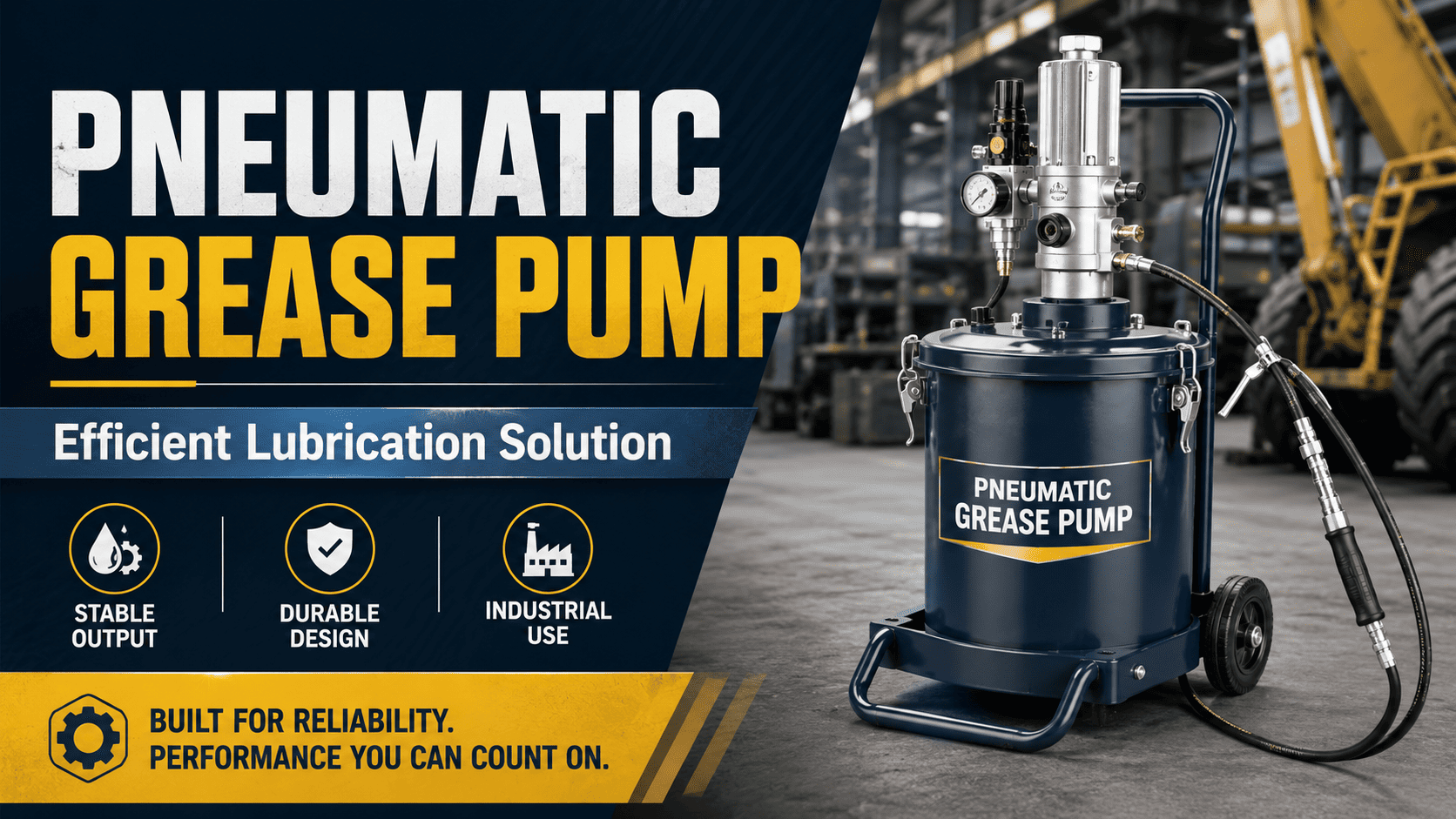
A pneumatic grease pump is an air-powered lubrication device designed to deliver grease efficiently and consistently to machinery, vehicles, bearings, joints, pins, bushings, and industrial components. Instead of relying on manual force, it uses compressed air to drive the pump mechanism, helping operators apply grease with better speed, consistency, and working efficiency.
In automotive workshops, heavy equipment maintenance, manufacturing plants, agriculture, and construction machinery service, grease lubrication is essential for reducing friction, lowering wear, and extending equipment service life. Choosing the right pneumatic grease pump depends on grease viscosity, pressure ratio, drum size, hose length, output capacity, and maintenance requirements.
Many users compare grease pumps by price or pressure ratio first, but in real working environments, the more important questions are whether the pump matches the grease type, whether the air supply is stable, whether the hose layout fits the job site, and whether maintenance can be handled easily later. A pneumatic grease pump is not just a tool for pushing grease out of a drum. It is part of the overall lubrication workflow, and its stability directly affects working speed, consistency, and equipment protection.
Contents
Section One: What Is a Pneumatic Grease Pump?
A pneumatic grease pump works by using compressed air to power an air motor, which drives the pumping mechanism and pushes grease from the drum through the hose, grease gun, and nozzle. This makes lubrication faster and less labor-intensive compared with manual grease pumps. For operators who need to lubricate multiple points repeatedly, the reduction in physical effort can be substantial.
Compressed air is useful for grease delivery because grease is thick and requires pressure to move smoothly through hoses and fittings. With a pneumatic system, operators can maintain more consistent output, especially when lubricating multiple points or large equipment. This consistency is one of the main reasons workshops and industrial users prefer air-powered systems over hand pumps in frequent-use conditions.
Compared with a manual grease pump, a pneumatic grease pump reduces physical effort and improves work efficiency. Manual pumps may be suitable for occasional lubrication, but air grease pumps are better for workshops or industrial environments where lubrication work is frequent. In busy service areas, the difference is not only about convenience but also about time savings across repeated daily tasks.
Industries that commonly use pneumatic grease pumps include automotive repair, truck maintenance, construction machinery service, agricultural equipment, mining machinery, manufacturing plants, metalworking facilities, and centralized lubrication applications. In all of these sectors, reliable grease delivery helps reduce wear and maintain smoother mechanical operation over time.
Section Two: Common Applications
Automotive maintenance and repair shops often use pneumatic grease pumps for vehicle chassis lubrication, bearings, suspension components, joints, and workshop maintenance tasks. The pump helps technicians work faster, especially when servicing multiple vehicles daily. In this environment, the benefit is not just speed, but also improved consistency in lubrication work across repeated service routines.
Heavy machinery lubrication is another major application. Excavators, loaders, cranes, forklifts, trucks, and industrial machines all have components that require regular grease application. A pneumatic grease pump can deliver grease more efficiently over longer working distances. This becomes especially important when machines are large, lubrication points are numerous, and maintenance time needs to be controlled carefully.
Manufacturing equipment maintenance also relies on grease lubrication. Bearings, guide rails, gears, moving joints, conveyor systems, and production equipment need regular lubrication to reduce downtime and prevent premature wear. In factory settings, lubrication efficiency can directly affect preventive maintenance schedules and equipment stability.
Agricultural and construction equipment service often requires pumps that can handle tough environments. Equipment used outdoors may have dusty, muddy, or high-load operating conditions, making regular grease delivery especially important. In these conditions, the pump must not only work, but also remain dependable under harsh service demands.
Section Three: Key Components
| Component | Function | Selection Focus |
|---|---|---|
| Air motor and pump body | Convert compressed air into pumping action | Pressure ratio, durability, output stability |
| Grease drum and follower plate | Support smooth grease feeding from the drum | Drum size compatibility, suction stability |
| Hose, gun, and nozzle | Deliver grease to the lubrication point | Length, pressure rating, usability |
| Regulator and valves | Control air pressure and grease output | Safety, output control, leak prevention |
The air motor and pump body are the core components of a pneumatic grease pump. The air motor converts compressed air into mechanical motion, while the pump body moves grease from the drum into the delivery line. These two parts largely determine the pump’s output performance and how well it can handle thick grease under repeated use.
The grease drum and follower plate help keep grease feeding smoothly into the pump. A follower plate can reduce air pockets, improve suction, and help the pump draw grease more consistently, especially when working with thicker grease. This may seem like a minor detail, but in practice it can make a major difference in avoiding unstable flow.
The hose, gun, and nozzle assembly determines how grease is delivered to the lubrication point. Hose length, pressure rating, nozzle type, and grease gun quality all affect usability and safety. Even when the pump body is strong, poor hose selection or a weak gun assembly can limit overall performance.
The pressure regulator and control valves help manage air pressure and grease output. Proper pressure control is important because excessive pressure may damage components, while insufficient pressure can cause poor grease flow. In real use, pressure balance matters more than simply choosing the highest number available.
Section Four: How to Choose a Pneumatic Grease Pump
Grease viscosity compatibility is one of the first factors to consider. Thicker grease requires stronger pumping capacity and suitable suction design. If the pump is not compatible with the grease grade, it may experience blockage or unstable output. This is why selecting by pressure ratio alone is not enough.
Pressure ratio and output capacity should match the application. A higher pressure ratio may be needed for long hoses, high-resistance fittings, or heavy-duty equipment. However, higher pressure is not always better; it must fit the actual lubrication requirement. Over-specification can increase complexity without improving performance in daily use.
Drum size and installation method also matter. Pneumatic grease pumps may be used with different drum capacities, such as small pails, medium drums, or larger grease barrels. The selected model should match the workshop’s grease consumption and storage method. A mismatch here can create unnecessary handling inconvenience and reduce efficiency.
Hose length and working distance should be planned based on the layout of the service area. If operators need to lubricate equipment far from the pump, a longer hose and suitable pressure capacity are required. In other words, the work environment should be considered together with the pump specification, not as an afterthought.
Section Five: Installation and Operation
Compressed air supply requirements should be checked before installation. The air pressure, air quality, compressor capacity, and air line diameter can all affect pump performance. Clean and stable compressed air helps extend pump service life. If the air system itself is unstable, pump performance will often appear inconsistent even when the pump is not actually faulty.
Grease drum setup and priming are important for smooth operation. Before starting, the pump should be properly installed into the drum, the follower plate should be positioned correctly, and air pockets should be reduced as much as possible. A poor setup at the beginning can cause output problems that continue throughout operation.
Safe operation procedures include checking hoses, fittings, pressure settings, grease gun condition, and operator protection. High-pressure grease injection can be dangerous, so users should never point the nozzle at skin or people. Safety awareness is especially important because lubrication work can feel routine, even though the equipment still involves pressure-related risk.
Common setup mistakes include using the wrong grease grade, insufficient air pressure, loose fittings, excessive hose length, poor drum installation, or ignoring air moisture. These issues can cause unstable flow, leakage, or pump failure. In many cases, what looks like a pump defect is actually a setup or support system problem.
Section Six: Maintenance and Troubleshooting
Air leakage and pressure loss are common problems. Operators should inspect air lines, seals, valves, regulators, and fittings. If the pump cycles abnormally or output becomes weak, pressure loss should be checked first. Many performance issues can be traced back to simple air system leakage rather than a major pump failure.
Grease blockage and flow issues may occur when grease is too thick, contaminated, cold, or hardened inside the hose. Regular cleaning, suitable grease selection, and proper storage can reduce blockage problems. This is especially important in workshops where temperature changes or long idle periods can affect grease condition.
Seal wear and replacement timing depend on usage frequency, grease type, operating pressure, and maintenance habits. Worn seals may cause leakage, unstable pressure, or reduced output, so they should be inspected regularly. A pump can still appear to run while gradually losing efficiency, which is why scheduled inspection matters.
To extend pump service life, keep compressed air clean and dry, avoid excessive pressure, use compatible grease, clean the suction tube and hose when needed, and follow the manufacturer’s maintenance schedule. Long-term performance usually depends more on consistent maintenance practice than on the pump model name alone.
Section Seven: Industry Trends
Centralized lubrication systems are becoming more common in industrial facilities and heavy equipment. These systems can distribute grease to multiple lubrication points, reducing manual work and improving consistency. For high-volume industrial users, centralized systems can turn lubrication from a manual task into a more controlled process.
Automated maintenance solutions are also gaining attention. As factories and service centers focus on reducing downtime, lubrication equipment is increasingly integrated into preventive maintenance programs. This means grease pumps are no longer viewed only as standalone tools, but as part of broader reliability planning.
Smart monitoring for lubrication equipment may include pressure sensors, flow monitoring, operation counters, and maintenance alerts. These functions help operators identify abnormal lubrication before equipment failure occurs. Monitoring does not replace maintenance, but it can make abnormal conditions easier to detect early.
Future pneumatic grease pumps may continue to develop toward higher efficiency, easier maintenance, better sealing, safer operation, and integration with automated lubrication systems. For industrial users, reliability and service support will remain key selection factors. In practice, future buying decisions will likely depend not only on specification sheets, but also on system compatibility and long-term service value.
Conclusion
A pneumatic grease pump is widely used for industrial and automotive lubrication tasks, especially where consistent grease delivery and improved work efficiency are required. Selecting the right model depends on grease type, output pressure, operating distance, drum size, and maintenance needs.
For long-term performance, users should also pay attention to compressed air quality, hose condition, seal maintenance, and safe operating procedures. A well-selected and well-maintained air grease pump can improve lubrication efficiency and reduce equipment downtime. In many real-world cases, proper selection and routine upkeep make the biggest difference in long-term value.
FAQ
What is a pneumatic grease pump?
A pneumatic grease pump is an air-powered device used to deliver grease to machinery, vehicles, bearings, joints, and other lubrication points.
Where is a pneumatic grease pump used?
It is commonly used in automotive workshops, heavy machinery maintenance, manufacturing plants, agriculture, construction equipment, and industrial lubrication systems.
How do I choose the right pressure ratio?
The pressure ratio should be selected based on grease viscosity, hose length, fitting resistance, output demand, and the type of equipment being lubricated.
What type of grease can it handle?
It depends on the pump design. Users should check grease grade, viscosity compatibility, and manufacturer specifications before use.
Why does the grease pump lose pressure?
Pressure loss may be caused by air leakage, worn seals, blocked grease lines, loose fittings, insufficient air supply, or damaged valves.
How often should a pneumatic grease pump be maintained?
Maintenance frequency depends on usage intensity, grease type, operating conditions, and manufacturer recommendations. Regular inspection of seals, hoses, air lines, and fittings is recommended.
延伸閱讀:
Why use investment casting? Optimizing High-Quality Valve Casting